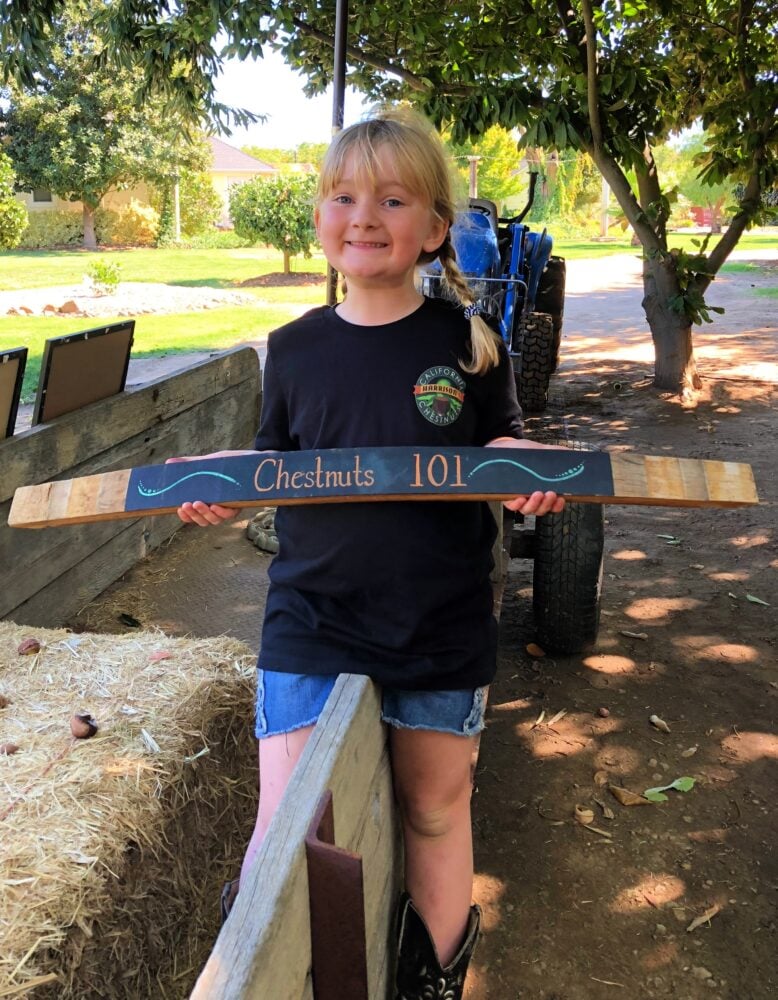
It’s harvest season, and Harrison’s California Chestnuts in Gridley, California, is in full swing, with the family and crew sweeping, gathering chestnuts and removing their prickly burs.
Growing Colossal Chestnuts in California’s Feather River Basin
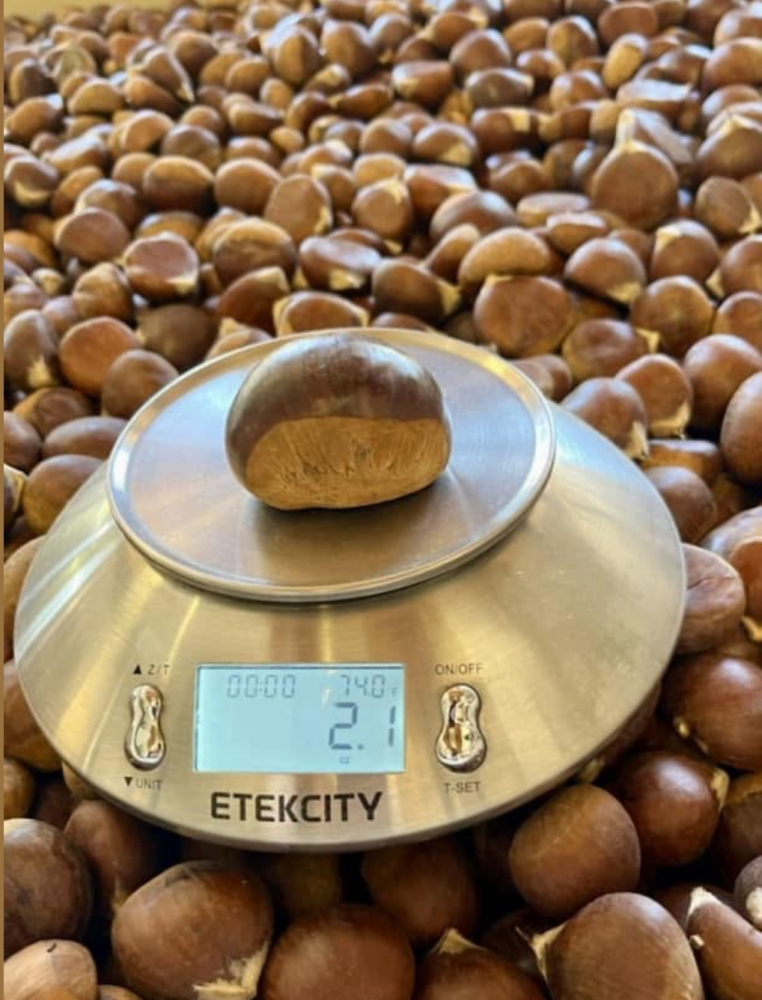
The family-owned orchard has been growing chestnuts since 2004, when the Harrisons purchased the established farm. Principal owner and head grower Sandy Harrison and her son-in-law Kevin Murphy care for the orchard year-round, then harvest the crop and handle the chestnuts carefully to preserve freshness for their customers. Harrison’s grows Colossal chestnuts, a variety prized for its size and sweet flavor. In recent years, some nuts have weighed as much as 2.1 ounces each.
The chestnuts’ flavor reflects the family’s commitment to caring for the orchard, but the soil plays a role, too. The trees thrive in the Feather River basin’s loamy, nutrient-rich soil, which Sandy describes as feeling like “moist chocolate cake.” The orchard’s mature trees benefit from the region’s fertile growing conditions.
Beyond Roasting
Chestnuts are synonymous with the holiday season, thanks in part to the famous Christmas song about roasting them over an open fire. But these gluten-free, grain-like nuts are far more versatile than that familiar lyric suggests.
Chestnuts can be microwaved, boiled or air-fried. The Harrisons prefer air-frying for easy peeling. Once cooked and peeled, the tender, brain-shaped kernels can be chopped and sautéed with chicken or vegetables, blended into hummus or incorporated into desserts. Their flavor works equally well in savory and sweet dishes.
Store and Preserve Fresh Chestnuts
Fresh chestnuts continue to cure after harvest, converting starches to sugars and becoming sweeter over time. A little movement between the skin and shell can indicate that the nuts have cured. Because fresh chestnuts are perishable, freeze them to extend their storage life or dry and mill them into gluten-free flour.
“When making soup, I advise that you prep the chestnuts in advance and pop them in the freezer, so they’ll be ready when you want to make the soup and not have to make it an all-day production,” Sandy says.
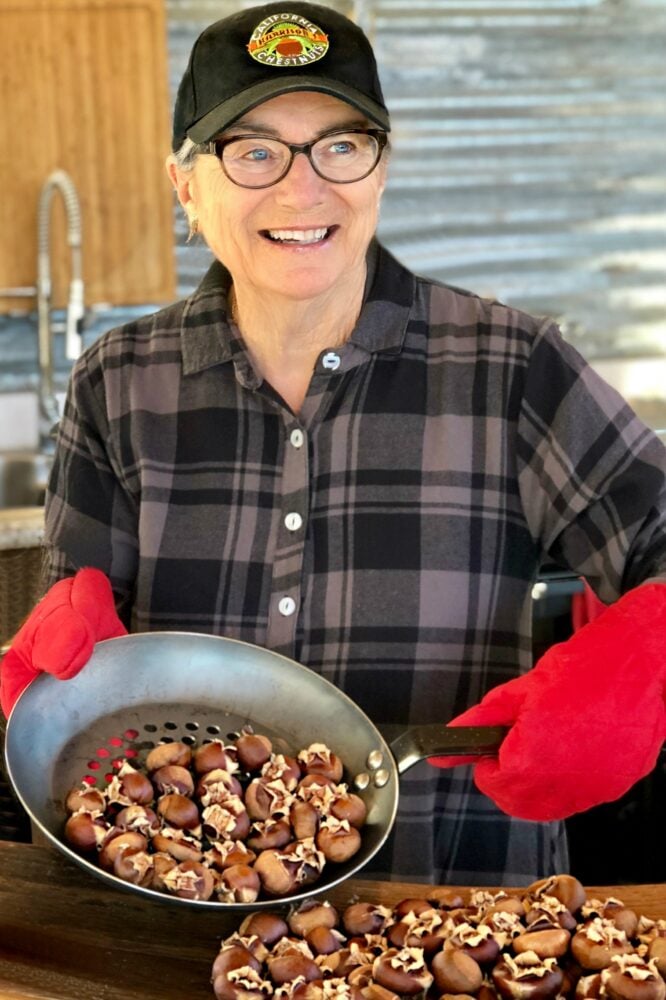
In her outdoor kitchen, Sandy scores each shell, then roasts the chestnuts in an air fryer or a specialty pan on the stovetop. She also recommends serving them on a fall-inspired charcuterie board alongside ripe cheese, seasonal fruit, jams, bread and red or white wine.
Chestnut Nutrition
Chestnuts offer rich flavor along with a nutritional profile that sets them apart from conventional tree nuts. Compared with many conventional tree nuts, including walnuts, almonds, pistachios and cashews, chestnuts are lower in calories and fat. Nutritionally, they are more similar to grains than to other nuts.
“Chestnuts have a good balance of proteins, complex carbs, vitamins and virtually zero fat. They’re good for slow digestion and gluten-free,” Sandy says.
Chestnuts have been an important food source in Europe for centuries, where the trees also provided wood for fuel and other uses. The trees eventually made their way to North America, where different varieties were cultivated. Chestnut trees can live for hundreds of years, and a couple of the Colossal chestnut trees at Harrison’s are at least 50 years old.
California Chestnut Harvest
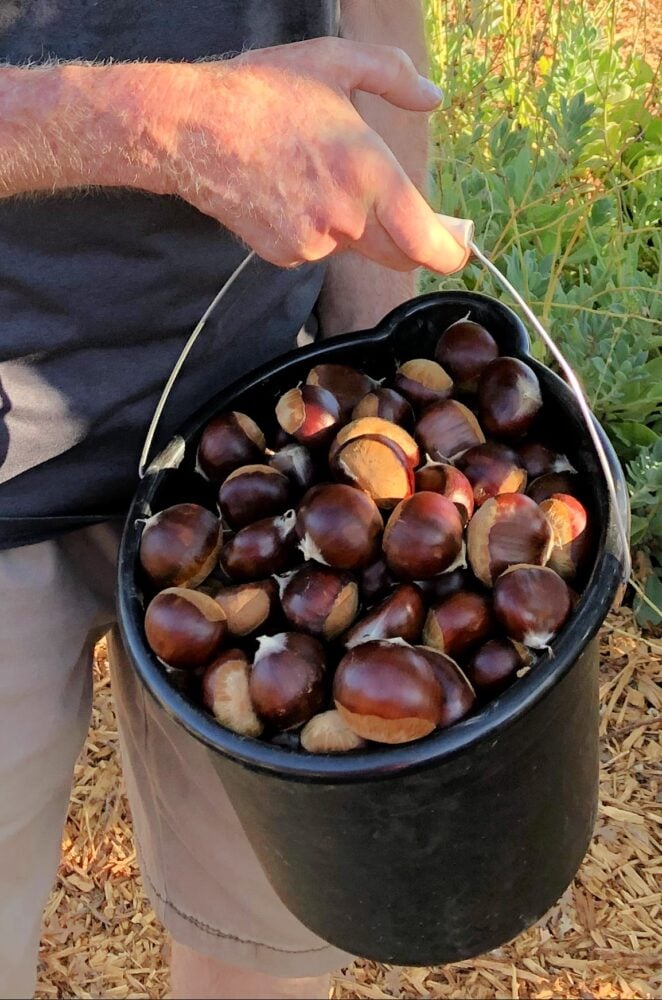
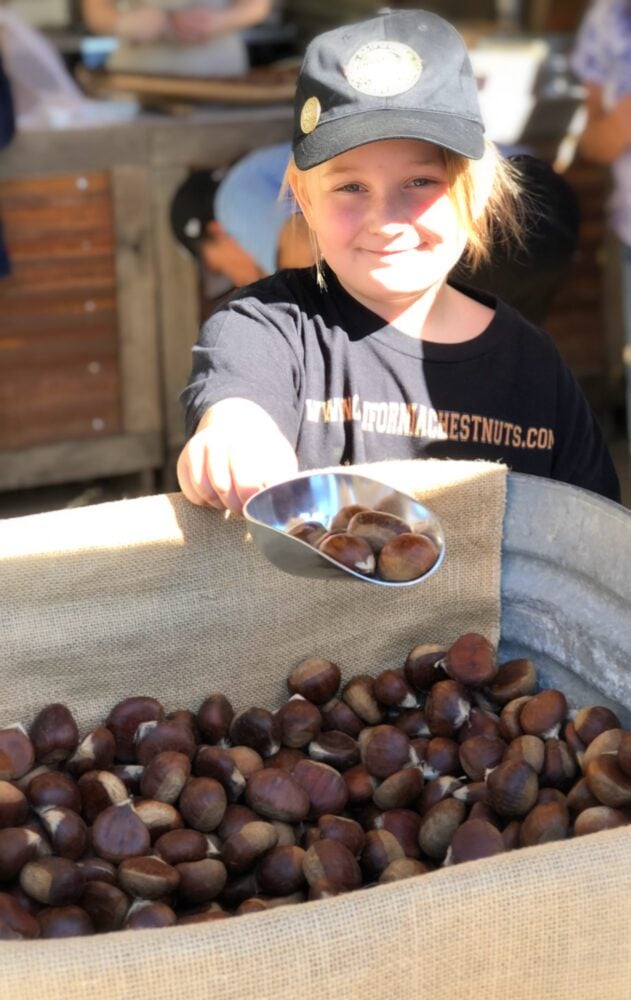
Chestnuts begin forming on the trees in May, with orchards capable of producing several thousand nuts per acre. Harvest typically takes place in September and October. At Harrison’s, the entire crew turns out to sweep the orchard floor, gather the fallen nuts and remove their burs.
Unlike many other nut crops, chestnuts are not harvested by shaking the trees. Instead, the nuts fall naturally to the ground and are collected from the orchard floor. It’s dirty, labor-intensive work, as farming often is, but the Harrisons do it out of love for the orchard, their longtime customers and the legacy of Sandy’s late husband, Paul Harrison. Harvest is an all-hands-on-deck family affair.
When to Buy Fresh Chestnuts
If you want to bring a taste of fall to your table or impress friends and family with a chestnut roast, September and October is the time to buy. Don’t wait until winter to look for fresh California chestnuts. Shop in season and order directly from Harrison’s California Chestnuts before the family sells out online.